
Kamo
A Little Kyoto in the Hokuetsu Region with Camellia and Paulownia Chests
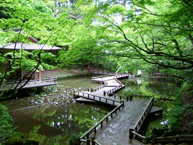 Kamo City is located almost in the center of Niigata Prefecture. The city has long been called a “Little Kyoto in the Hokuetsu region” as its geographical elements are similar to those of Kyoto’s: surrounded by mountains in three directions and with a Kamo River whose origin starts from Mt. Awagadake and runs into the Shinano River. Kamoyama Park, located near the city center, is blessed with rich nature and is loved as a recreation site for local people. The park is also known for beautiful Yuki Tsubaki, or Snow Camellia which showcases splendid blossoms in the heavily-snowy region in winter. Approx. 50,000 camellia trees will be in bloom in the early spring. Kamo is famous for the production of traditional paulownia chests (Kiri Tansu). The traditional techniques of the craftsmen and their quality are highly valued throughout the county.
Sightseeing Highlights in Kamo
Aomi Shrine
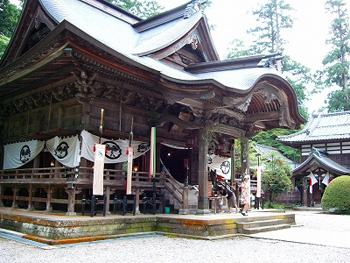 Aomi Shrine is an extremely old shrine established in 726 which is mentioned in the official records of the imperial government of those days. When the national capital was relocated to Kyoto, the area became an official property of Kamo Shrine in Kyoto and this was how Kamo City got its name today. Every year on May 21st is the day of the Spring Festival. It is also called “Uba (Nanny) Festival” since mothers have their babies dress in special costumes and join a sacred procession.


Kamoyama Park
 A park where a number of Yuki Tsubaki, or Snow Camellia (the tree of Niigata Prefecture) grow. There are many attractions in the park such as Snow Camellia Garden, Squirrel Park, Forest of Sculpture, a large slide as well as a stone monument of a famous song, “Snow Camellia” by Sachiko Kobayashi, a famous Japanese singer from Niigata Prefecture.
Mt. Awagatake Public Resort
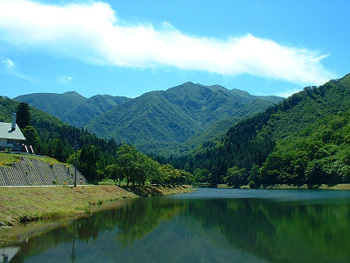 Visitor center, campsite, herb garden, natural forest and many attractions where people can enjoy the natural surroundings and relax. There is a charcoal burning hut where visitors can try burning charcoal.
Gejokawa Dam
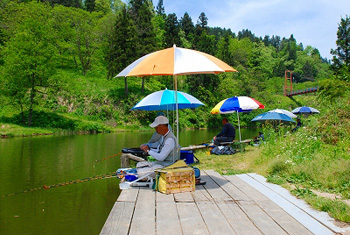 Hera-buna carp fishing, botanical garden of hygrophilous plants, dragonfly ecosphere, learning center about nature and many other attractions welcome people. Especially popular is the hera-buna carp fishing and a number of fishing lovers come to enjoy from around and outside of the prefecture.
Fuyudorigoe Ski Garden
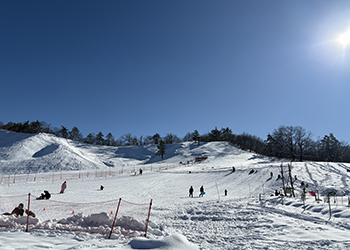 It has a welcoming family-friendly ski slope. There is also a sledding area. Families with children thoroughly enjoy sledding there on weekends.Oldest wooden train in Niigata Prefecture, “Moha #1,” semi-steel train “Moha 61,” electrical locomotive “ED1” are exhibited at the site.
Kamo Nanatani Hot Spring `Bijin-no Yu`
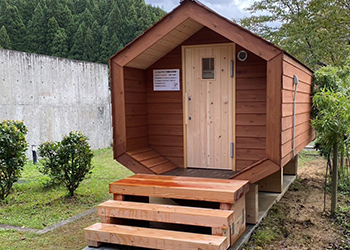 An onsen hot spring for a day-trip. People can enjoy a superb view of Mt. Awagatake while bathing. Hexagonal saunas are also popular.
Important Annual Events in Kamo
Snow Camellia Festival
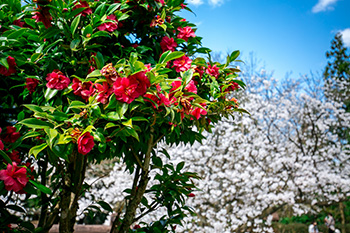 This spring festival is held around Kamo-Yama Park, which has a cluster of Niigata Prefecture’s official tree, Snow Camellia. Light-up, stage events, Snow Camellia Marche etc, and many other events will be conducted.
Koi Nobori Carp Streamers above the Kamo River
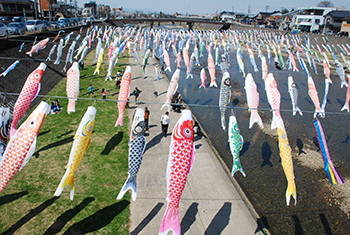 A spring highlight of the town in which some 500 koi carp streamers “swim” in the air above the Kamo River. Colorful koi streamers appear gorgeously in the blue sky and many families visit the town to enjoy the view.
Kamo Festival (Spring Festival of Aomi Shrine)
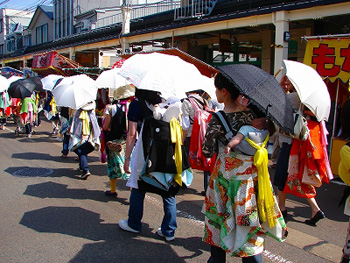 A spring festival of Aomi Shrine which was founded in 726. The shrine is worshipped as the deity of safe child delivery and child raising. Mothers have their babies dress in special traditional costumes and join a sacred procession, therefore, the festival is also called Uba (Nanny) Festival.
Jojo Festival (Spring Festival of Nagase Shrine)
 This festival is also called “Dango (sweet dumpling) Festival” since it is held around the time when Sasa Dango (sweet dumplings wrapped with a bamboo leaf), a signature sweet of Niigata, start to be sold in the area. During the Shinko Procession, an unusual hexagonal mikoshi portable shrine will parade around the city.
Echigo Kamo River Summer Festival
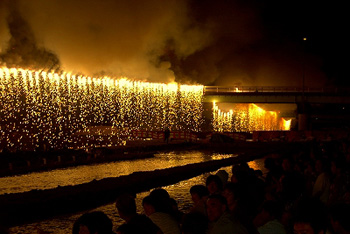 A large-scale summer festival held by the Kamo River bank. The festival ends with the fireworks display. The Niagara Falls Fireworks viewed up close and launched along the riverbanks create a beautiful shower of light
Traditional Crafts of Kamo
Kamo Kiri Tansu Paulownia Chest
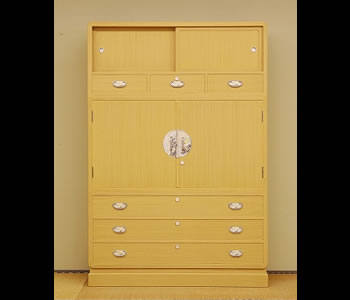 Kamo is one of the foremost production areas of paulownia chest in Japan.Paulownia chests are regarded as the finest quality furniture due to the warmth of the wood, silky white shimmer and beautiful straight wood grains and color. It was designated as the Traditional Craft of Japan by the Minister of Economy, Trade and Industry on December 15th, 1976.
Byobu Folding Screen
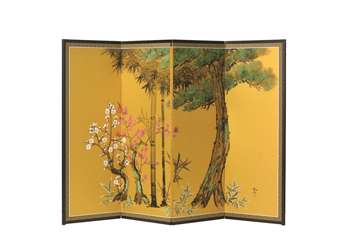 Traditionally, folding screens, or byobu, were an essential furniture in a Japanese house for blocking wind coming into the house and people looking in from outside as well as for decorative purposes. Kamo is very famous for the paulownia chests and folding screens are yet another main craft; 90% of folding screens in Japan come from Kamo City.
Mounting Furniture
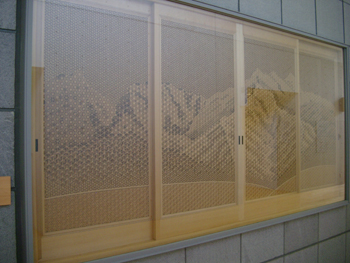 Kamo City was already well-known as a production area of traditional Japanese mounting furniture since the late Edo period (1818-1831). Recently they produce “Kamo Sash” which is a sash made of wood.
Food & Specialties of Kamo
Locally-brewed Sake (Kamo Nishiki, Yuki Tsubaki, Masu Kagami)
Sake breweries in Kamo City produce quality Japanese sake many of which won awards in different competitions.
Sweets
Kamo has many popular local sweets: Yuki Tsubaki Sablé (a Snow Camellia-shaped buttery cookie), Karintō Manju (a crispy, deep-fried bun made with brown sugar-infused dough and filled with red bean paste), Oni no Kanabō (a crunchy, long oval-shaped Karintō Manju inspired by a Japanese demon’s cudgel), Karurusu Senbei (a light and crispy cracker with a gentle sweetness), and Tanabe no Karintō (a soft and flavorful snack made from fried dough coated in rich brown sugar glaze) and more.
Fruits
Fruits from Kamo City are highly praised; Niitaka nashi (Japanese pear), Le Lectier (Western pear) and jelly using Le Lectier are particularly popular.
- Access
- Kamo Station on JR Shinetsu Main Line
- Contact
- Kamo City Commerce and Tourism Section
- TEL:0256-52-0080 / FAX:0256-53-4676
- E-mail: syoko@city.kamo.niigata.jp
- URL: https://www.city.kamo.niigata.jp/